
For decades, the simple act of standing up represented a major hurdle for individuals recovering from surgery or managing chronic conditions. Traditional manual lifts required significant physical effort from caregivers, often leading to back injuries and chronic strain. Meanwhile, patients faced the indignity of being hoisted passively, missing the crucial opportunity to engage their muscles during the transfer. The landscape of patient handling has shifted dramatically with the development of the modern electric sit to stand lift. This device does not just lift a patient; it facilitates a physiological standing motion using a powered actuator that provides steady, reliable upward movement. This technology bridges the gap between total dependence and independent mobility, allowing patients to bear as much weight as they can safely manage while the machine handles the rest. For care facilities and home environments alike, understanding the clinical and operational benefits of this equipment is essential for optimizing outcomes and reducing liability.
The Biomechanics of Safety: How an Electric Sit to Stand Lift Reduces Falls and Caregiver Strain
The core advantage of an electric sit to stand lift lies in its precise replication of the natural standing curve. When a person stands up from a seated position, their center of gravity shifts forward and upward. A manual pivot transfer, where a caregiver physically helps a patient stand, places immense stress on the caregiver’s lumbar spine and forces the patient into an unstable position if they lose balance. An electric sit to stand lift removes this guesswork. The motor drives the patient forward and up in a single, controlled motion, ensuring the body moves as a single unit rather than twisting or jerking. This significantly minimizes the risk of shear force on the patient’s skin and soft tissues, which is a primary cause of pressure injuries during repositioning.
Furthermore, the electric actuator provides a significant mechanical advantage. While a hydraulic manual lift requires the caregiver to pump a lever, which can be tiresome and uneven, the electric version delivers consistent, smooth velocity. The caregiver simply presses a button on the hand control, allowing them to focus entirely on the patient’s posture and foot placement. This reduces the cognitive load of the transfer. The lift does the heavy lifting, literally. According to ergonomic studies, using a powered lift can reduce the compressive force on a caregiver's lower back by over 70% compared to a manual two-person pivot. This is a game-changer for aging workforces in healthcare settings where nurse burnout and injury are rampant. By integrating this technology, facilities can maintain a healthier staff while simultaneously providing a more dignified experience for the resident or patient.
The stability mechanics of the lift also play a critical role. Most electric models feature a wide-based chassis that can straddle a bed or wheelchair. The locking casters create a rigid base, preventing the lift from tipping forward during the transfer. Unlike standing harnesses that feel restrictive, modern slings focus on supporting the lower back and thighs, giving the patient a secure but unconfined feeling. This psychological security often encourages patients to actively participate in their recovery, using their leg muscles to push up while the lift manages their weight. This active involvement is crucial for maintaining muscle mass and improving circulation, directly impacting the speed of rehabilitation for joint replacement patients or those with neurological deficits.
Evaluating Core Components: Duty Cycles, Sling Design, and Battery Life
Not all electric sit to stand lifts are built for the same workload. When selecting a unit for a busy skilled nursing facility versus a private home, the specifications of the motor and battery system become paramount. The duty cycle of the electric actuator indicates how often the lift can be used without overheating. High-frequency lifts in a rehab unit require a motor designed for heavy intermittent use, while a home unit might prioritize quiet operation. Modern lithium-ion battery systems have revolutionized mobility, allowing caregivers to take the lift down long hallways or into bathrooms without hunting for a wall outlet. The ability to perform multiple full transfers on a single charge is a critical feature for any professional healthcare environment.
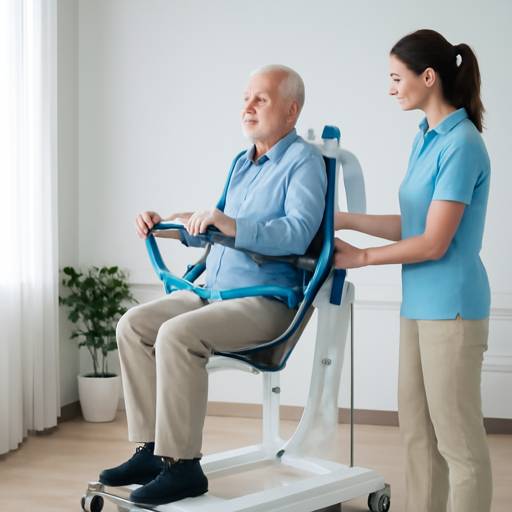
Sling compatibility is another variable that directly affects patient comfort and safety. While the lift frame provides the structure, the sling is the interface. The best slings feature a padded back support and quick-release clips that allow the sling to be placed without rolling the patient excessively. For patients with limited trunk control, a sling with a higher back offers necessary stability. For ambulatory patients, a smaller thigh-only sling may suffice. The quality of the knee pads and footplate also matters. A cushioned knee pad prevents pressure on the patella, while a non-slip footplate ensures the patient’s feet do not slide during the ascent. These details separate a comfortable, therapeutic transfer from a stressful one.
When exploring models, consider the specific footprint required by your space. You can often customize the setup of an electric sit to stand lift to fit narrow doorways or extra-wide wheelchairs. The leg spread mechanism—either manual or power-assisted—is vital for stability around obstacles. A power leg spread adds weight to the base but provides a one-handed operation that is highly valued in acute care settings. Caregivers should also evaluate the hand control interface. Large, tactile buttons are preferable for gloved hands, and a lock-out feature prevents accidental activation by confused patients. Ultimately, the value of the investment correlates directly with how well the lift's engineering matches the specific transfer challenges of the user population.
Real-World Applications: Case Studies in Rehabilitation and Long-Term Care
The clinical utility of the electric sit to stand lift is best understood through specific use cases. In a post-acute orthopedic unit, a 74-year-old patient recovering from a total knee arthroplasty was struggling with the two-person pivot technique. The patient was anxious about falling and involuntarily tensing, which hindered the surgery team. Introducing an electric sit to stand lift allowed the patient to self-pace the standing motion. The smooth, quiet motor reduced anxiety. The nursing staff noted that the patient’s willingness to transfer improved significantly, leading to earlier ambulation and a discharge date two days sooner than the unit average for similar cases. The lift eliminated the fear of the "drop" associated with manual transfers.
Another compelling scenario involves a patient in the mid-stages of Parkinson’s disease. The patient could stand for a few seconds but lacked the momentum to rise from a deep chair or a low hospital bed. Using a manual lift was frustrating for the caregiver, and the patient often froze during the transition, creating a high fall risk. The electric sit to stand lift provided a consistent, predictable starting momentum. The lift's forward tilt brought the patient’s center of gravity over their feet, reducing the rigidity of "freezing" episodes. The family caregiver reported that the electric lift made it possible to keep the patient at home for an additional six months, a testament to how the right equipment directly impacts the sustainability of home care.
In a large skilled nursing facility, a case study tracked worker compensation claims before and after adopting a fleet of electric sit to stand lifts. Prior to the rollout, the facility recorded an average of 12 back strain injuries per year among nursing aides related to standing transfers. After training staff on the new equipment and designating these devices for all "weight-bearing" patients, the number of lift-related injuries dropped to zero in the following fiscal year. The facility also reported a 30% reduction in overall transfer time per patient. By delegating the physical effort to the electric motor, the staff had more energy for patient interaction and clinical observation. This demonstrates that the return on investment for these lifts is not just in safety and comfort, but in operational efficiency and staff retention.
